When you start shooting action sports seriously, the first thing you notice is how much of the game happens between the shots. Getting the sight picture fast, breaking the shot cleanly, and moving on to the next target. That rhythm is what separates a decent time from a great one. But there is a difference between shooting at static cardboard and shooting at something that behaves more like a real opponent. That is where a moving Mickey target comes into play.
I have spent more afternoons than I can count at the range, burning through rounds on stationary paper. It teaches you fundamentals, no question. Grip, trigger control, follow-through. Yet the moment I started training with a target that actually moves, I realized how much I had been missing. The way your eyes track a moving object is different. The way you decide when to commit to the shot changes. It is not just about being fast. It is about being fast at the right time.
Connect with us on Facebook.
What Makes a Moving Target Different
A static target lets you settle. You take your stance, get your grip right, and then you press the trigger. With a moving target, that luxury disappears. You have to acquire the sight picture while the target is still in your zone, and your hand has to track with it. The timing is everything. If you wait too long, the target slides behind cover or out of your shooting lane. If you rush the shot, you drop points on a bad hit.
Training with a moving Mickey target trains you to make decisions faster. It pushes your visual processing to keep up with the pace of a real encounter. In IPSC and action air disciplines, that translates directly to better stage performance. You start seeing openings you would have missed before.
Building the Right Technique
When I first tried a moving target, I made the classic mistake. I tried to track it smoothly, like following a clay pigeon with a shotgun. That does not work with a handgun. The pistol is too twitchy. What works better is a sort of predictive tracking. You watch the target, estimate its path, and then move the gun in a short burst to intercept. You do not follow it all the way. You let your eyes lead and your hands catch up.
Another key point is trigger control under motion. When you are moving the gun laterally, the natural tendency is to jerk the trigger at the moment you think you are on target. That will pull the shot low or wide. What I found helped was practicing a smooth, deliberate trigger press even while the gun was in motion. It feels unnatural at first. You have to trust the process. But after a few sessions, the hits start landing in the A-zone consistently.
Practical Drills You Can Try
You do not need a fancy electronic setup to get started. Here are a few drills I have used that work with a simple moving target on a string or a remote rail system:
- Tracking without firing. Just stand at the ready and follow the target with your eyes and gun. No trigger. Focus on keeping the front sight on the target as it moves left and right. Do this for five minutes before you shoot.
- Single shot on the move. Set the target to move across a 10-foot window at a moderate speed. Draw and fire one shot when the target is in the center. Reset and repeat. Work on calling your shot.
- Two-shot burst. Same setup but fire two shots. The second shot should land as fast as the first. This teaches you to stay on target through the recoil.
- Transitions between static and moving. Place one static target and one moving target. Engage the static target first, then transition to the moving target. This mirrors a common stage setup in IPSC.
Each drill should be done slowly at first. Speed will come as your neural pathways adapt. I usually run these drills for about 20 minutes at the start of a practice session, before I switch to stage work.
Choosing the Right Target for Your Training
There are a lot of moving target systems on the market, from simple rope-and-pulley setups to motorized rails with programmable speeds. The important thing is that the target itself is durable enough to take repeated hits without falling apart. For airsoft and action air shooters, a steel target is great because it gives audible feedback. For live-fire practice, a paper target on a carrier works well because you can see your hits and adjust.
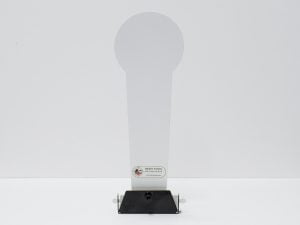
One option that has become popular is a dedicated moving Mickey target. These are designed to mimic the shape and movement of a human-sized threat, with scoring zones that match standard IPSC targets. They are sturdy, easy to set up, and they force you to aim for the high-scoring zones under motion. That specificity matters. You are not just shooting at a moving blob. You are shooting at a target that rewards precise placement.
Common Mistakes and How to Avoid Them
I have coached a handful of shooters who were new to moving targets, and the same issues come up every time. Here is what I see most often:
- Over-leading the target. Shooters try to aim ahead of the target like they are shooting a bird. With a handgun at close range, that is usually wrong. The bullet is fast enough that you aim right at the target and press. Leading only works if the target is far and fast.
- Stiff upper body. When shooters get tense, they try to move the gun with their shoulders. That creates jerky movement. The correct motion comes from the hips and a slight rotation of the torso. Keep the arms relaxed.
- Not calling the shot. In the heat of the moment, it is easy to fire and immediately look at the target for confirmation. Do not. Call your shot based on where the front sight was when the gun fired. That feedback is instant and lets you correct on the next rep.
- Skipping the dry fire. Dry fire with a moving target is invaluable. It lets you practice the movement pattern without noise or recoil. You can do it at home with a laser trainer or even just a piece of tape on the wall that you track with your eyes.
Each of these mistakes is fixable with focused practice. The key is to be honest with yourself about where you are losing points.
Integrating Movement into Your Stage Planning
Once you have the basic technique down, the next step is to use the moving target as part of a larger stage plan. In a competition, you will not have time to think about each shot. Your movement through the stage has to be automatic. That is why I like to set up mini-stages at practice that include one moving target and two static targets. I work on entering the area, engaging the static targets first, then picking up the moving target as I exit. The rhythm is different from what you do on a static-only stage.
One thing that surprised me was how much the moving target affected my footwork. I started moving sooner, getting into position earlier, so I had more time to track the target as it came into view. That small change shaved a full second off my stage time in one match. It did not come from shooting faster. It came from moving smarter.

Final Thoughts on Training with Motion
If you have been training on static targets only, I encourage you to add at least one moving element to your practice routine. It does not have to be expensive or complex. Even a target that swings on a rope will teach you something. But if you can get access to a purpose-built moving Mickey target, you will see your draw and transition times improve faster than you expect. The reason is simple: your brain adapts to the real-world demand of tracking a threat that does not stand still.
Shoot N' Train, located at Thermopilwn 17, Keratsini 187 57, Greece, offers a range of premium IPSC, action air, and airsoft targets for shooters looking to elevate their practice. They can be reached at +30 697 837 6939 for inquiries about their moving target systems and other training equipment.